The University of Arizona has posted an interesting new batch of images from HiRISE, taken between July 8-31 this year. Wired, in its writeup on the Mars image collection, includes a sample image that looks sorta…familiar…
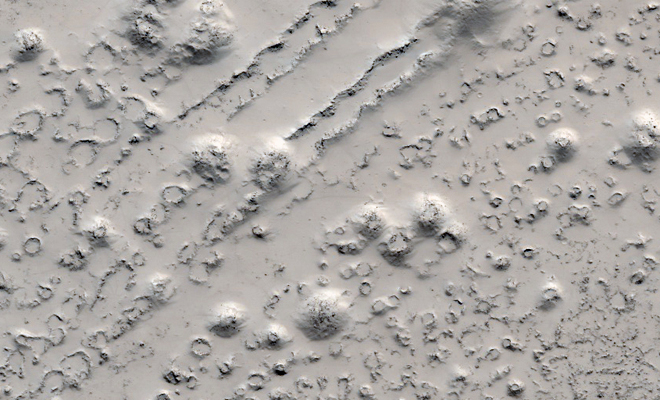
These volcanic cones were formed by hot lava running over water or ice. The heat from the lava boiled the water underneath, and the water burst upwards in an exploding bubble of lava. The explosion threw chunks of molten and solid lava into the air to gather into the cones. These cones are similar in size and shape to cones found in Iceland.
Probably because last month I saw some of the craters in Iceland referred to in the Wired article:

It’s a little hard to appreciate them from this angle – short of renting a plane or climbing the Gibraltar-like pinnacle in the middle of the lake, there wasn’t a good vantage point from which to capture on film the features you could see with your eyes (well, okay, there sorta was, but I didn’t have my long zoom lens on the trip).
As I recall, the Mars Society was at one time considering establishing one of their analogue stations in Iceland. One could certainly choose far less Mars-similar locations…
[via Instapundit]